
It would be easy to say that the Texas grid once again dodged a bullet with the recent winter storm, BUT, the truth is, many positive changes have been implemented within our great state to make sure that another Winter Storm Uri doesn’t occur again. SPEER applauds all these necessary adjustments to help us all stay warm during some incredibly cold times.
However, with that being said, there is still a LONG LONG LONG way to go, and the South-central Partnership for Energy Efficiency as a Resource (SPEER) feels that even more could be done to help ensure an even higher percentage of positive outcomes during the way too frequent cold, and hot, spells that are menacing the Lone Star State.
Energy efficiency can play a pivotal role in solving some of the biggest challenges SPEER’s south-central region is experiencing: resource adequacy, or grid reliability, and resiliency during our summer heat waves and increasing winter storms. The International Energy Agency (IEA) refers to energy efficiency as the “first fuel” because it provides some of the quickest and most cost-effective solutions to reduce energy bills, improve air quality, and strengthen energy security (which is becoming more and more an issue within the US), without the immediate need to build more costly infrastructure such as thermal generation or transmission and distribution, much of which taxpayers shoulder the cost of.
Energy efficiency remains a low-cost, high-return tool to reduce demand and electricity use, and it can be implemented now. While policies stand in the way of its full potential, especially in the ERCOT market, energy efficiency can help stabilize the grid, keep buildings and their occupants safe and comfortable for longer periods of time when power outages do occur, and lower grid strain. This reduces the risk of power outages when we need to keep the lights on the most, such as during this most recent cold spell.
As this extreme weather becomes the new normal, inefficient homes and smaller commercial buildings put significant strain on the grid by consuming massive amounts of electricity in an effort to keep indoor temperatures comfortable and safe. For many in Texas, extreme cold can be a significant strain on their finances and disposable income. Roughly 3 million Texas homes and the majority of multi-family apartment complexes rely on electric resistance heating during extreme cold. These systems are HIGHLY INEFFICIENT and a major driver of peak demand during winter storms.
What is resistance heating? It’s basically your toaster on steroids trying to heat your living space. No…seriously, it is just a larger “heat strip” similar to the heat strip in your toaster slamming on full bore at 5KW or greater. For some Texans, this can mean a power bill of more than $400 in the winter. This is where the value of adopting and installing more efficient HVAC systems, such heat pumps, comes in. Aurora Energy Research recently released a study on the Impact of Demand Side Management in the ERCOT region, finding that the adoption of further energy efficiency and demand response programs would sharply reduce power bills for consumers and effectively reduce the risk of power outages during periods of highest system stress.
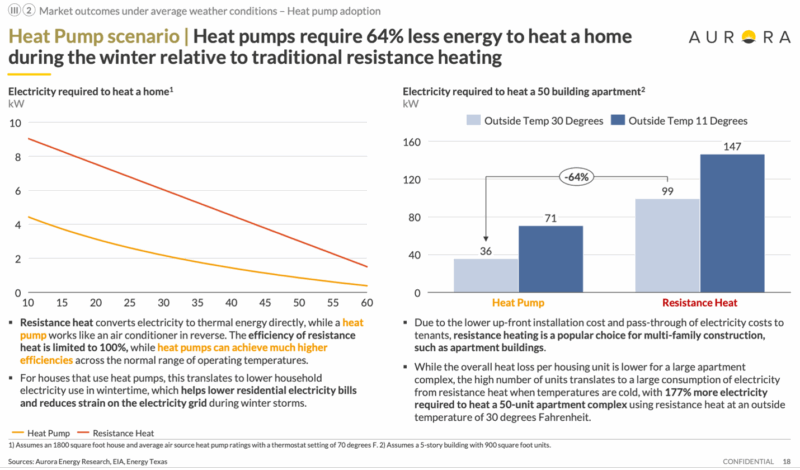
Multi-family and LMI housing are often built with low cost as the primary factor and energy efficiency as an afterthought. SPEER advocates each and every day to increase energy code standards to improve these buildings that we spend up to 90% of our time in. The cheapest and easiest way to build an efficient building is during the construction phase. Raising the minimum standards and implementing stronger building codes and retrofits to existing buildings for items such as windows, HVAC systems, and insulation products is vital for appropriately weatherizing homes and businesses. For renters and homeowners, there are a variety of ways to create a home centered around sustainability and efficiency, as our blog How Texas Homeowners Can Create A More Energy Efficient Home lays out.
SPEER continues to push for more energy efficiency adoption and education across our region of Texas and Oklahoma because we understand that implementing more efficiency measures would save Texans, and all consumers, millions of dollars in costs each year. Did you know that Texas has the most energy efficiency savings potential? What does this mean? Texans could save more than 15% of their electricity costs by 2035 simply if stronger energy efficiency measures were implemented by the utilities. By using energy more efficiently, energy efficiency helps address energy burdens and puts money back into consumer’s pockets, which then allows more money to flow into local economies.
Though this winter storm was not as severe and did not have near the consequences as Winter Storm Uri, it still highlights why more needs to be done to ensure Texans have resilient, sustainable, and efficient homes and businesses. Our power sector owes us that!
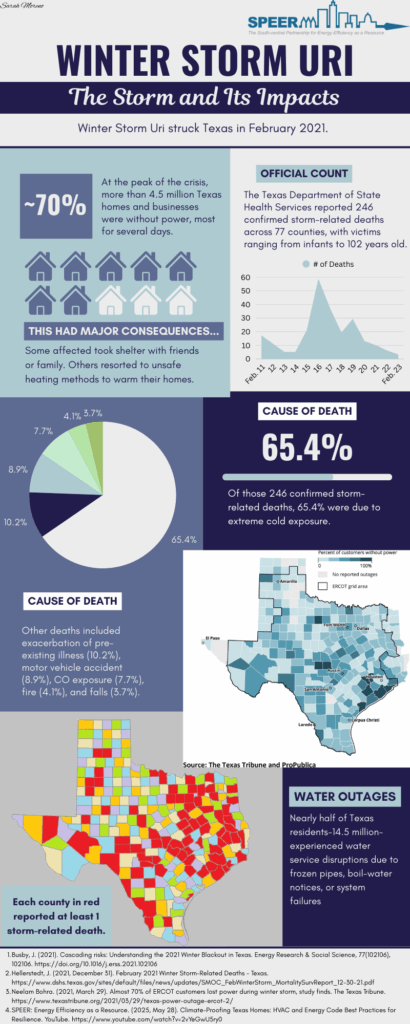
We know policy drives change, and we will continue to promote energy efficiency efforts in the region by bringing together diverse stakeholders to build consensus around well-researched, cost-effective policies. Through these efforts, SPEER will help in keeping the lights on for all Texans when we need them most.